
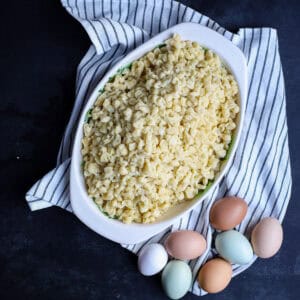
Instead of waxing poetic about how I grew up eating this dish and fondly remember the smell of it cooking in the kitchen of my childhood home, this is a recipe that wasn’t introduced to me until my mid-20s thanks to my now-husband’s German grandmother, Momma. That’s right – we’re talking spaetzle today! Or as you may know it by its proper German name, spätzle.
Admittedly, I didn’t quite get the hype when I first had it. My husband and his siblings went absolutely feral for it, and each were given gallon-sized bags of the shaggy egg pasta to bring home after Thanksgiving. For the uninitiated, spaetzle is a traditional German egg pasta typically served as a side for meat dishes with sauce. However, my husband taught me that the real magic lies in leftover spaetzle, in which the craggy little misshapen noodles are fried up in a pan with some butter and salted to taste. And with that, I was hooked!
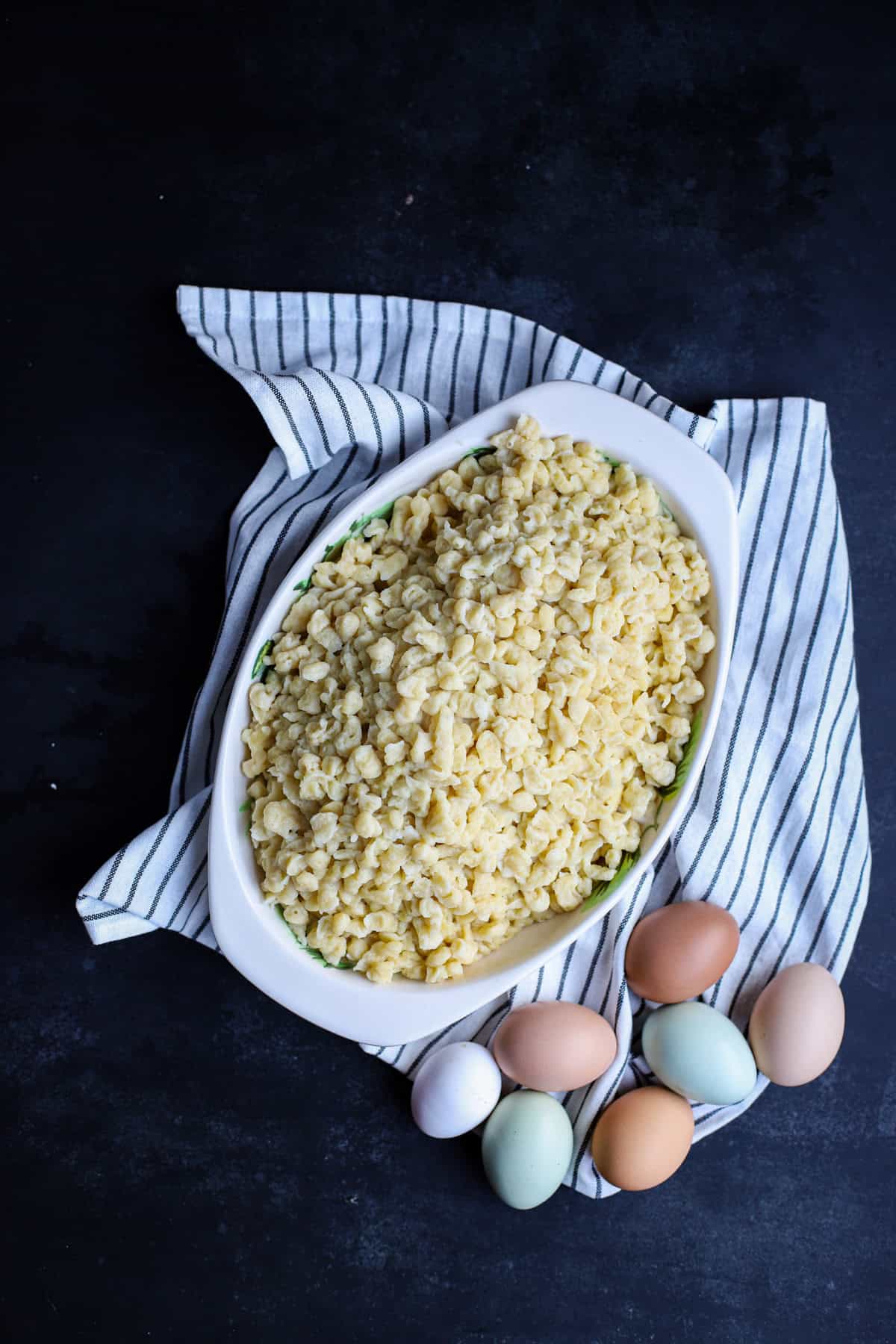
What is spaetzle?
Spaetzle, spätzle, spatzle...it's all good with gravy, baby! The German word spatz translates to sparrow, so this egg pasta is translated as little sparrows — how adorable is that? And because I'm an insufferable nerd and simply must learn about the history behind certain words, dishes, plants, you name it...according to germanfoods.org:
Spätzle are soft German egg noodles made from a loose batter of flour, eggs, salt, and water and eaten as a side dish in place of rice, potatoes or pasta. . The batter is pressed, scraped, or pushed into boiling water, where it cooks into small, tender noodles. Spätzle are especially associated with Swabia. Swabia or Schwaben as it is known in Germany consists generally of most of the state of Baden-Württemberg and part of the state of Bavaria. But spaetzle is enjoyed throughout Germany as a side dish for roasts, schnitzel, goulash, mushroom gravy, cheese, onions, and stews.
It wasn’t until we had kids of our own, though, that I started making spaetzle. My son in particular will absolutely hoover this pasta right up straight out of the pot. The following recipe is straight from my mother-in-law, who in turn got it from her mother, both of whom were born in Germany thus making this an official ILTR aka Incredibly Legit Traditional Recipe!
I’ve made these two ways: the first couple times simply scraping the dough off a wooden cutting board with a knife (incredibly tedious, but gets the job done), and subsequent times I’ve used a proper spaetzle maker. The dough is incredibly sticky and glutionous, and is dropped directly into boiling water where it cooks in mere minutes. Working in batches, you’ll drop the noodles in, let them bob around until cooked, then fish them out with a strainer and drain on paper towels.
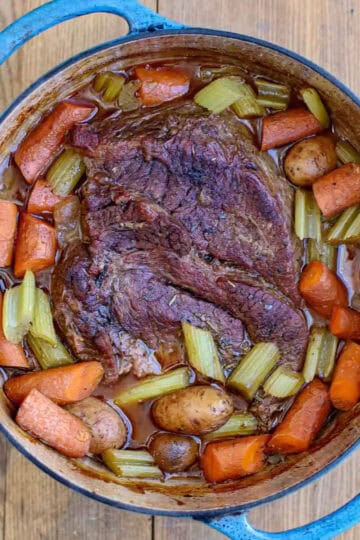
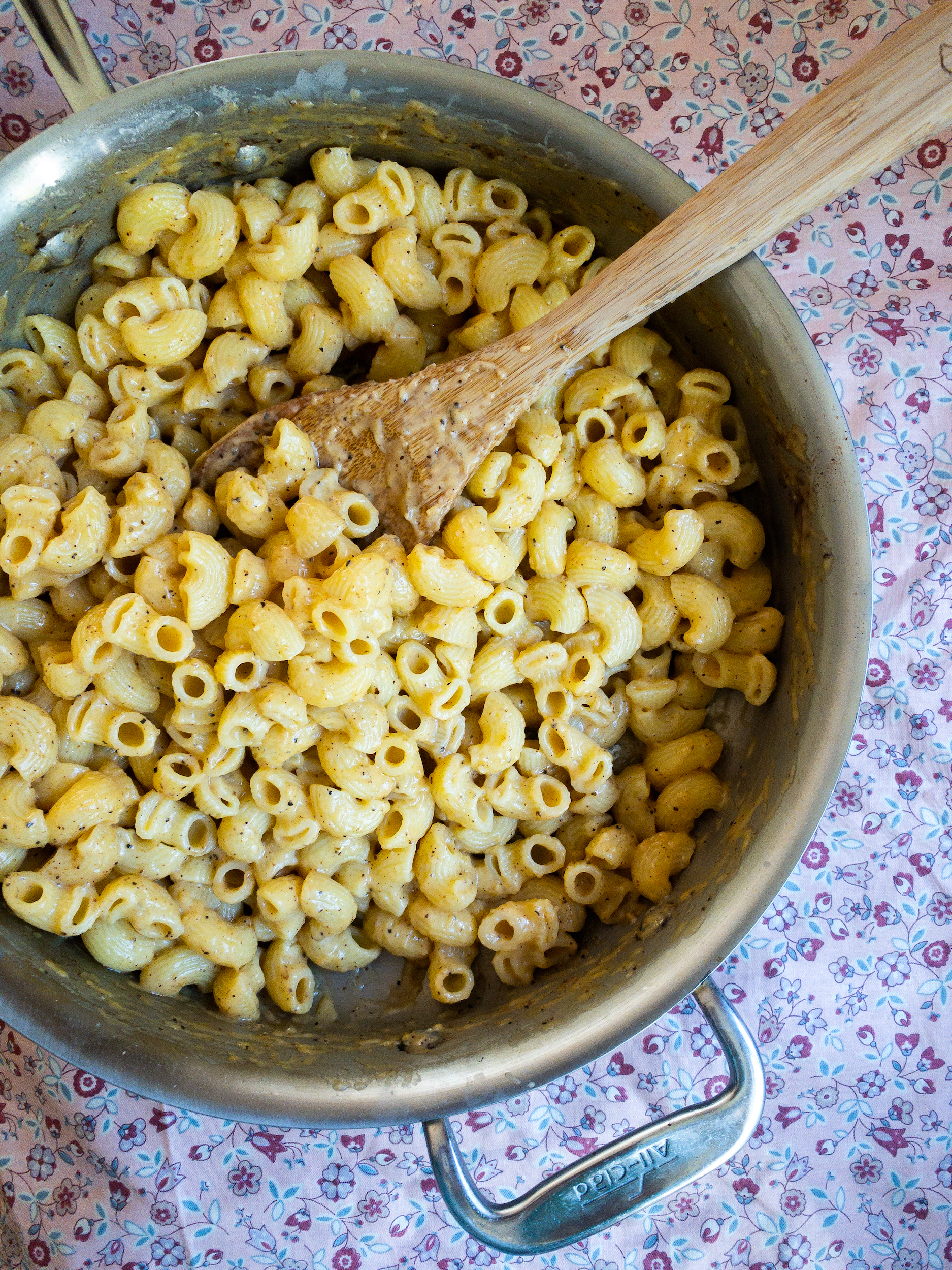
I’ll make this for kids to eat on their own, kind of like macaroni and cheese, but minus the cheese. Since the dough is rich, made with eggs and milk, it’s a filling meal on its own, but where it really shines is as a base to enjoy with beef stew or a pot roast during chilly weather. Of course, it’s also a staple on our Thanksgiving table now, where guests load it up with turkey and homemade gravy!
Jump to:
Ingredients
- All-purpose flour
- Eggs
- Milk
- Salt
See recipe card for quantities.
Instructions
- Step 1: Combine all ingredients in a blender, stand mixer, food processor, or by hand – I have done all methods and they all work, with varying degrees of frustration handling the sticky dough. Stand mixer is my preferred way to make spaetzle.
- Step 2: Bring a large pot of salted water to a boil.
- Step 3: Working in batches, drop dough through spatzle maker into pot of boiling water.
- Step 4: Let noodles cook for ~3 minutes then strain and dry on a paper towel-lined baking tray, and working in batches complete with the rest of the dough.
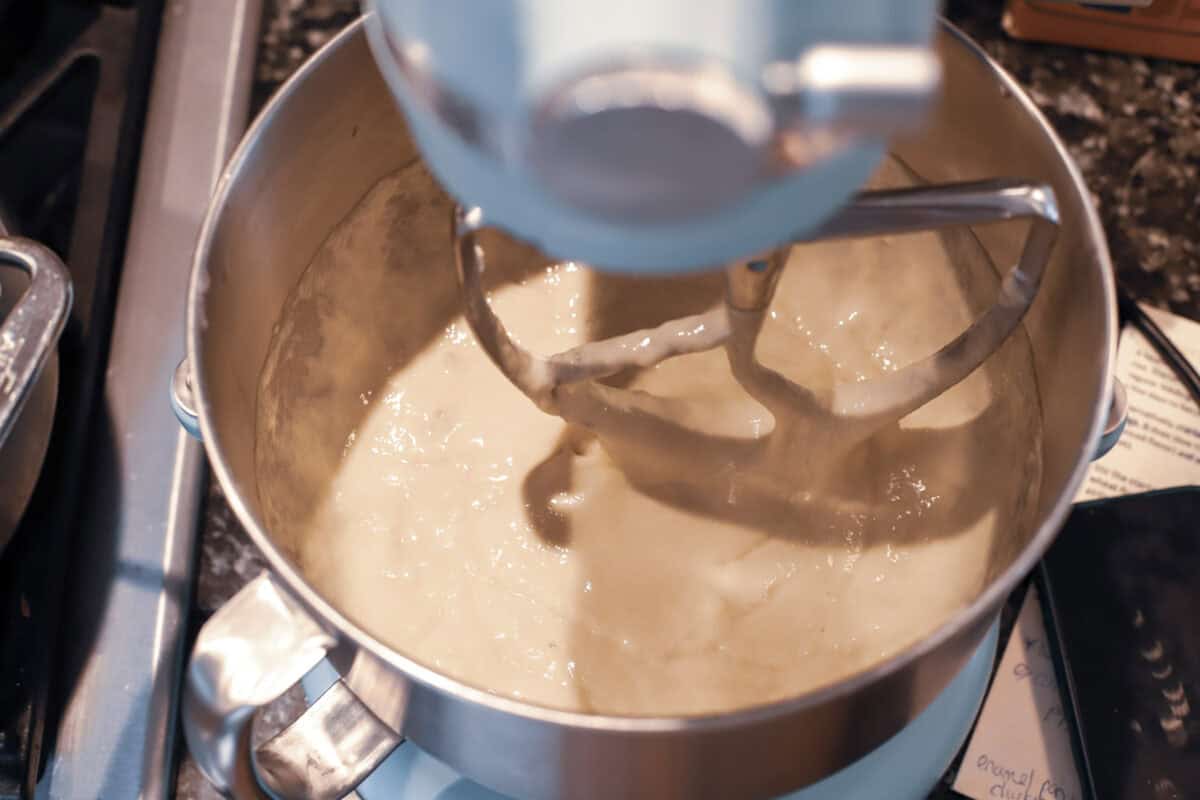
- My preferred method is stand mixer with paddle attachment.
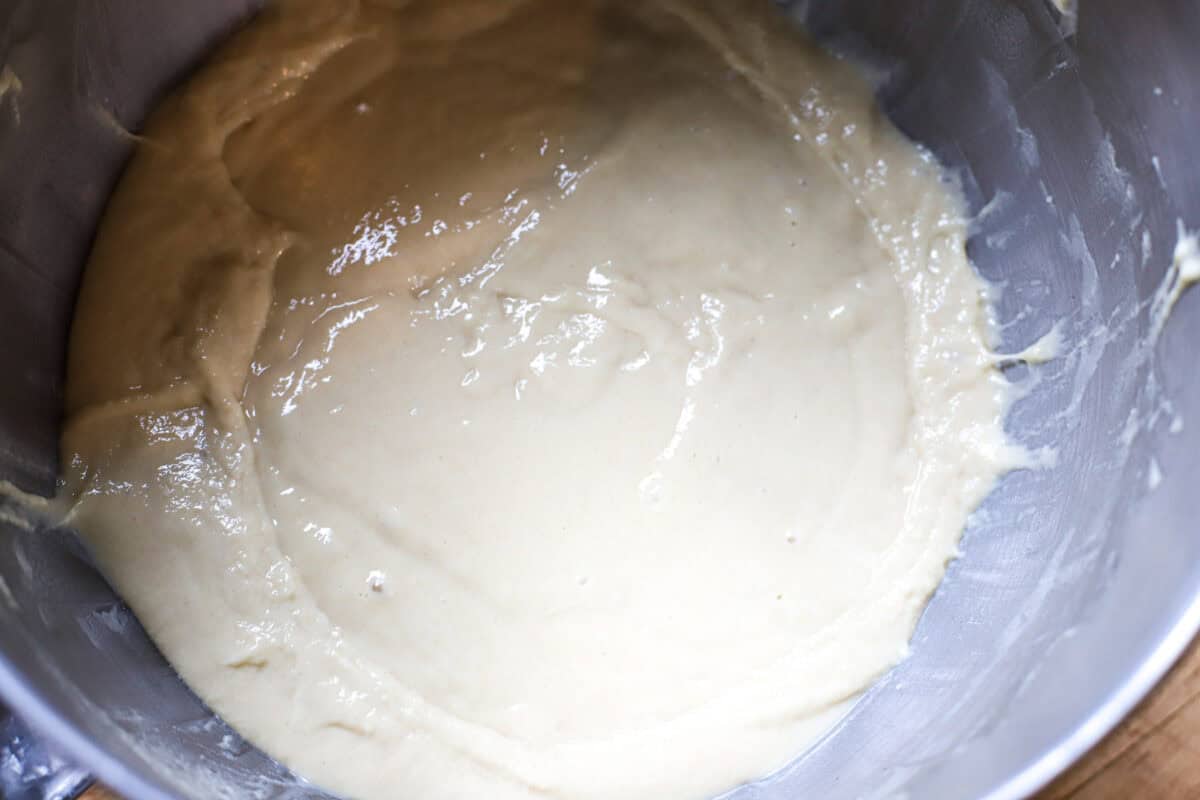
- Consistency is similar to pancake batter.
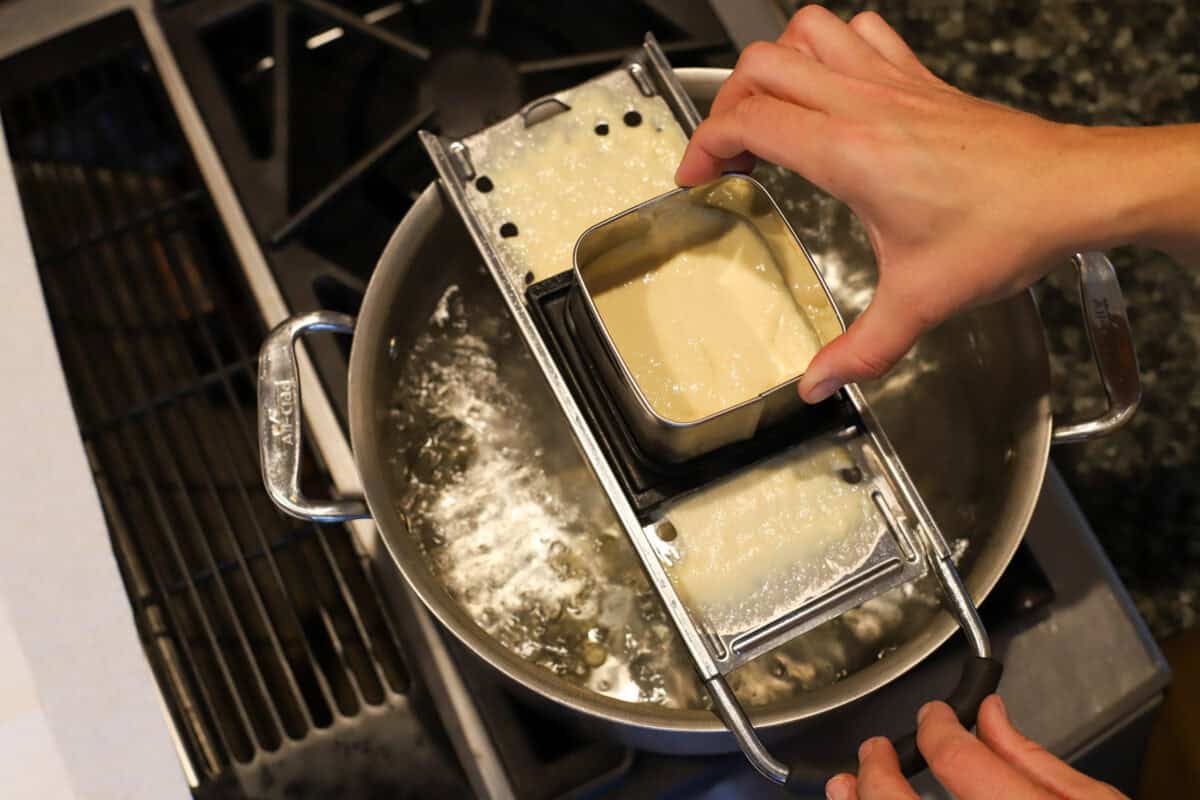
- Loading the batter into spaetzle hopper — usually takes 4 or 5 rounds!
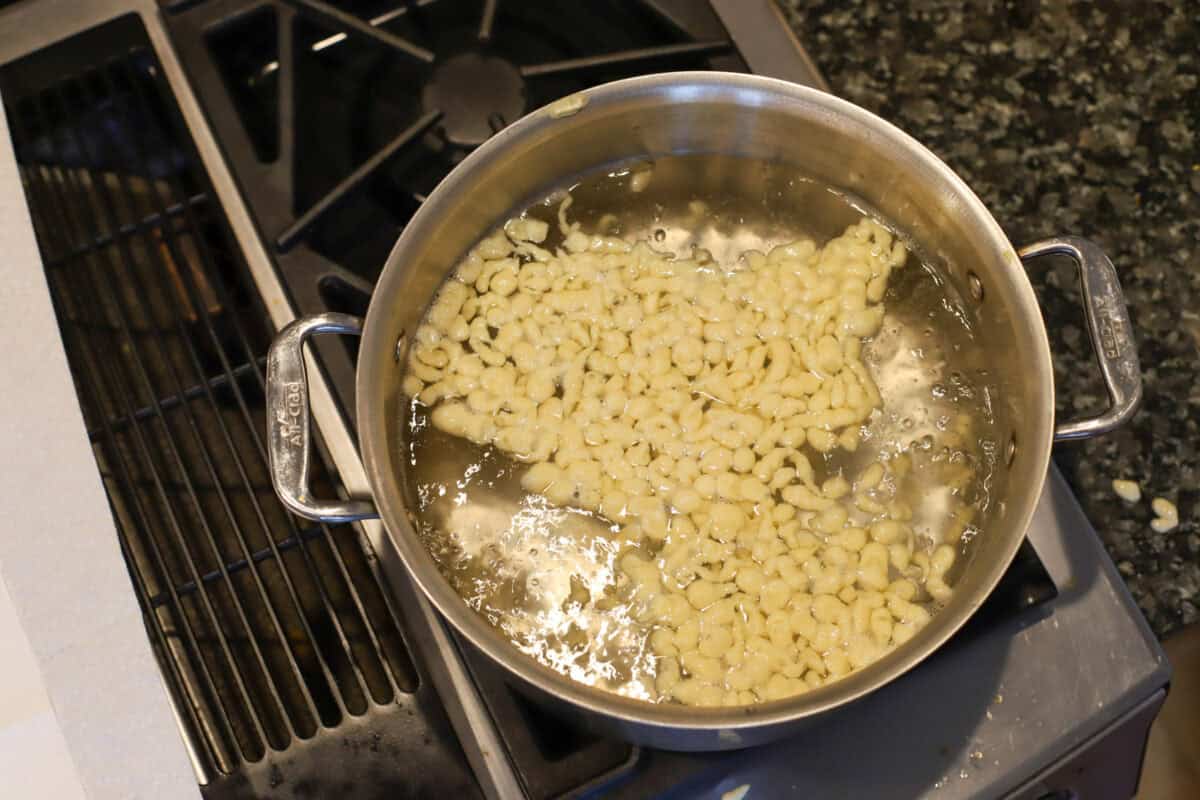
- Simmer noodles for ~3 minutes.
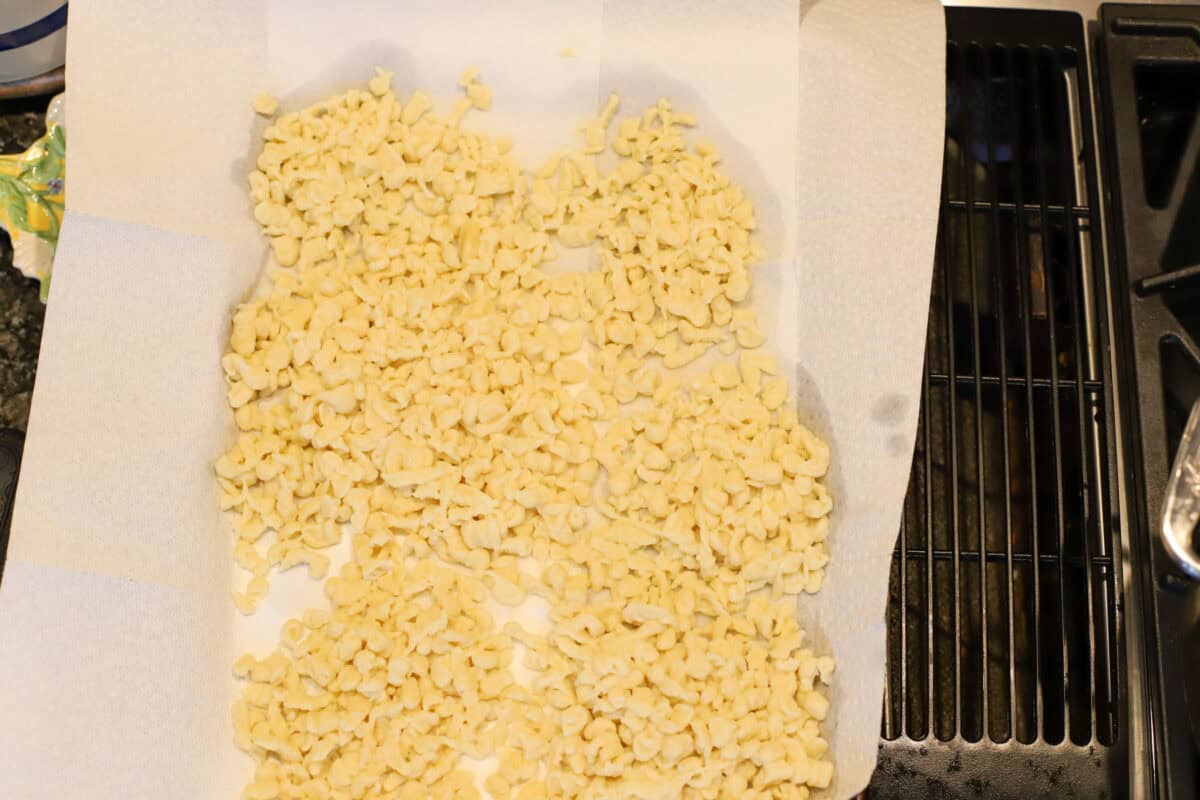
- Drain quickly on paper towel-lined baking sheet.
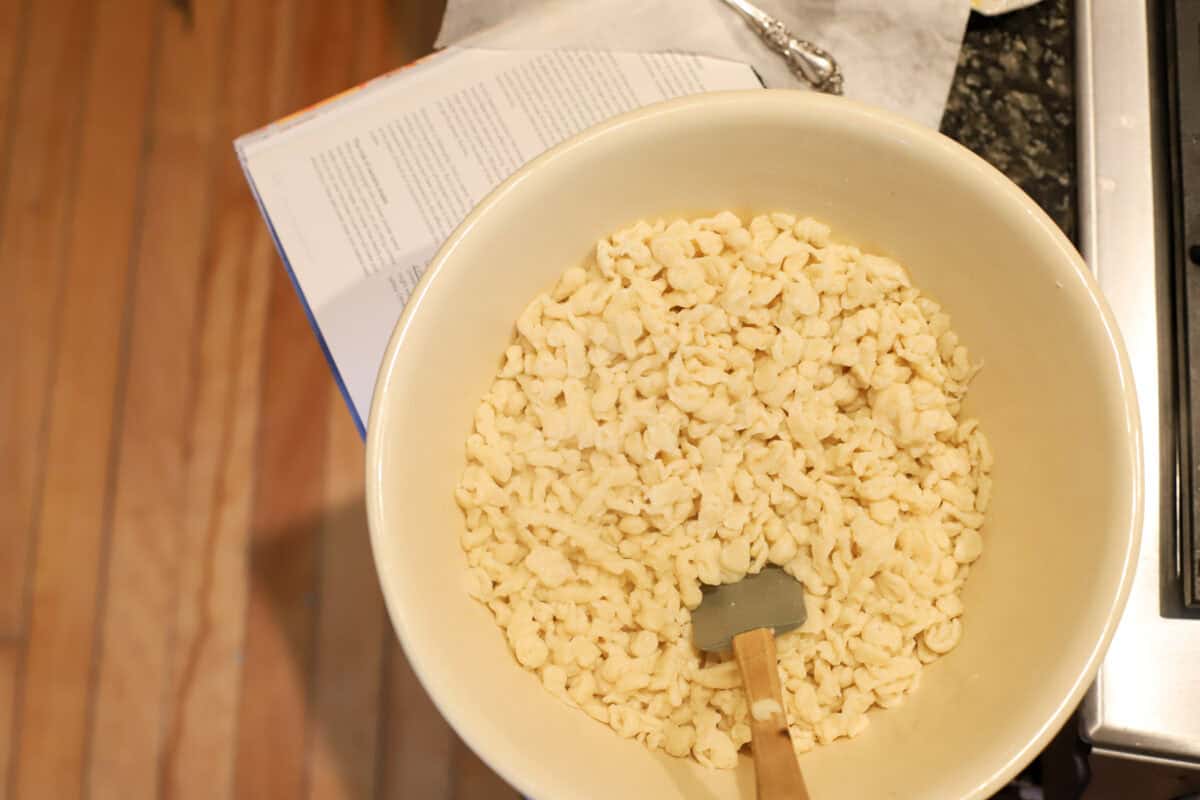
- Toss with 3 tablespoon melted butter to prevent sticking.
Substitutions
- Milk - instead of milk, you can use the same amount of water, but I think milk contributes to a richer dough overall.
Equipment
I’ve made this with both a stand mixer, blender, food processor, and by hand. I’ve also scraped noodles off a board with a knife, but much prefer using a spaetzle hopper as the dough is very sticky to work with and this makes it…slightly easier. The juice is worth the metaphorical squeeze, however!
Storage
Spaetzle is a great make-ahead dish (yay!) so once it's cooked, just let it cool, pop it in a covered container, and stick it in the fridge where it will keep for 3-4 days. Spaetzle also freezes beautifully, up to 3 months. If freezing, let thaw overnight in the fridge, then reheat by melting some butter in a pan and tossing it around until it's warmed through and a little golden.
Top Tip
When mixing the batter, you will know when it’s ready to cook because bubbles will begin to appear – that’s your sign you’re ready to rock and roll.
PAIRING

Homemade German Spaetzle
Ingredients
- 4 cups all-purpose flour
- 2 teaspoons fine sea salt plus more for the cooking water
- 4 large eggs
- 2 cups milk (see notes for substitution)
- Butter for tossing and serving
Instructions
Make the dough
- Add the flour and sea salt to the bowl of a stand mixer, food processor, blender, or large mixing bowl, and stir to combine. Add the eggs and milk.
- Beat on medium-low until you have a thick, very sticky batter. If you're using a stand mixer, use the paddle attachment. This takes about 8–10 minutes by machine, or longer by hand. The batter is ready when you pull it up with a spoon and small bubbles or holes appear. It will be looser than you might expect, like a very thick, sticky pancake batter that drips slowly off a spoon, and that's exactly right (see notes).
Cook the spätzle
- Bring a large pot of generously salted water to a boil, then reduce to a lively simmer.
- Set the spätzle maker over the pot and fill the hopper about one-third full. Slide it back and forth to drop the noodles into the water. (No spätzle maker? Press the batter through the large holes of a colander or box grater with a spatula, or spread a thin layer on the edge of a wet cutting board and scrape thin strips into the water with a knife, dipping the knife in the hot water between cuts.)
- Cook for about 2–3 minutes, until the noodles float to the surface.
- Lift the noodles out with a slotted spoon or spider strainer and drain on a paper towel-lined sheet pan. Transfer to a bowl and toss with a little melted butter so they don't stick together. Repeat with the remaining dough.
Serve
- Season with salt to taste and serve buttered, or alongside beef stew, roast beef, or turkey and gravy.
Notes
- About the batter: This family recipe makes a softer batter than some spätzle recipes, which call for a stiff dough, and that's on purpose! A looser batter drops easily through a spätzle hopper and cooks up into tender, delicate noodles. If you prefer a firmer, chewier spätzle, or you're using the board-and-knife method, you can beat in extra flour a tablespoon at a time until the batter is thick enough to hold its shape. If the batter ever gets too stiff to push through your spätzle maker, add a splash more milk.
- Milk substitute: You can use the same amount of water in place of milk, but milk makes a richer dough.
- Firmer noodles (optional): For a chewier texture, move the cooked spätzle into a bowl of ice water for a minute or two before draining and tossing with butter.
- For a little tang, some cooks whisk in a spoonful of sour cream, crème fraîche, or plain yogurt.
- Storage: Refrigerate cooled spätzle in a covered container for 3–4 days.
- Freezing: Freeze for up to 3 months. Thaw overnight in the fridge before reheating.
- Reheating (the best part!): Melt butter in a skillet and fry the spätzle until warmed through and golden in spots, then salt to taste. You can also microwave it in a covered dish so it doesn't dry out.
Leave a Reply